


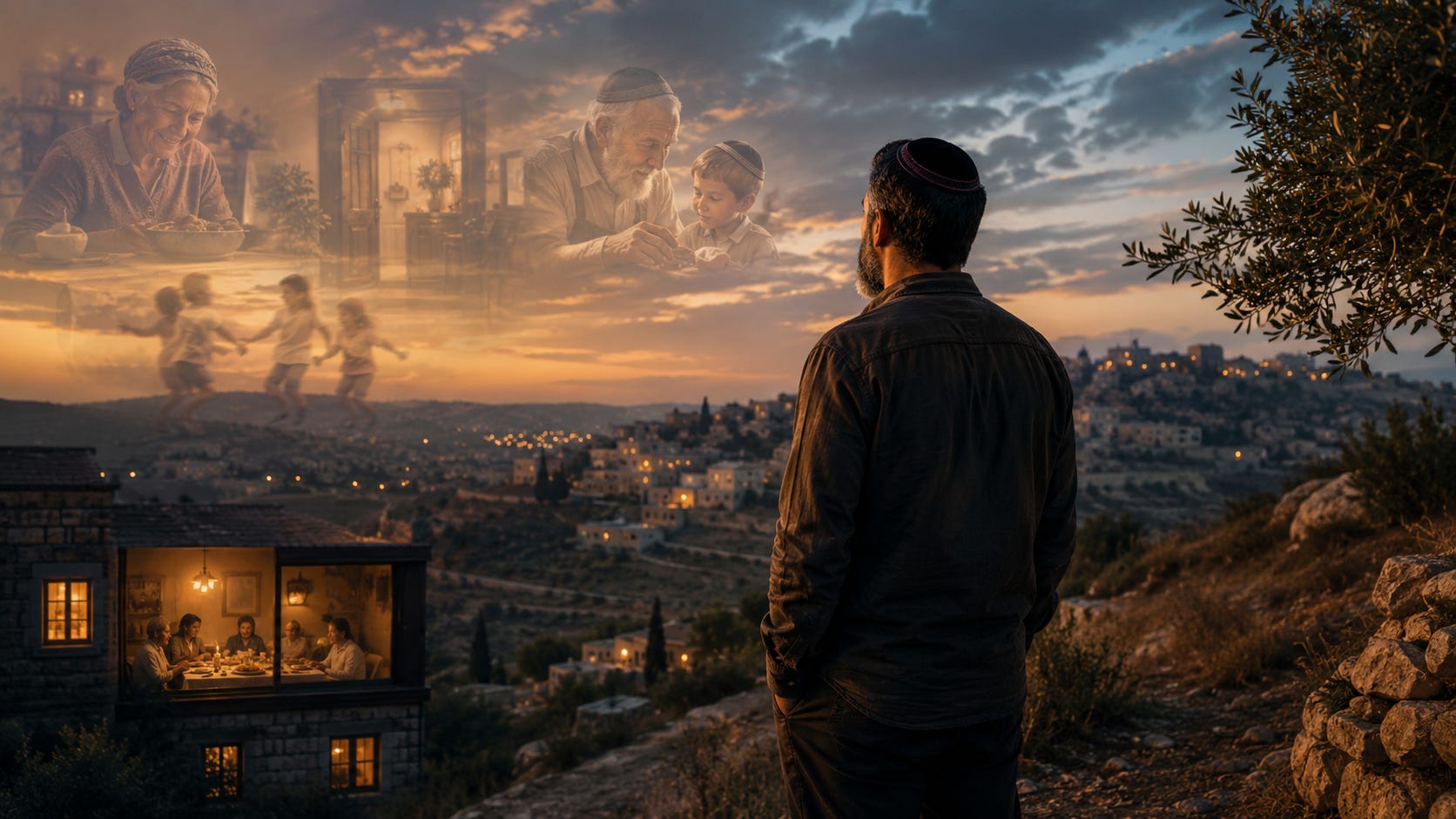
My mother died on July 3, 2022.
I can type those words.
I can say them.
I can tell you the date.
But there is still a part of me that does not quite understand how a person can be woven through your entire life and then suddenly become someone you speak about in the past tense.
My mother was.
I hate the word was.
There are certain words that should never have to sit next to the people you love.
My grandfather is another one.
He has been gone for decades, yet there are moments when the distance between then and now simply collapses. I can be a husband, a father of four, a man with gray in his hair and a lifetime of decisions behind him, and suddenly I am somebody’s grandson again.
That is the strange thing about grief.
It doesn’t care how old you are.
It doesn’t care how successful you became.
It doesn’t care how many countries you’ve lived in, how many times you’ve crossed the Atlantic, how many jobs you’ve had, houses you’ve owned, children you’ve raised or plans you’ve made.
It finds the little boy inside you and sits down beside him.
I grew up in Johannesburg.
Then South Africa became America.
America became more than twenty years of my life.
Arizona became home.
I went to university. Built a career. Got married. Had four children. We built the kind of life that, when you’re young, you imagine represents arrival.
And for years I kept moving.
Literally.
I have crossed the Atlantic more than sixty times.
Airports became ordinary. Passport control became ordinary. Suitcases became ordinary.
I became very good at going places.
What took me much longer to understand was where I belonged.
And even longer to understand that sometimes the people who make a place feel like home are disappearing while you’re busy building the next part of your life.
That thought bothers me more as I get older.
Because I remember being young enough to think my parents were permanent.
My grandparents certainly felt permanent.
Children believe that.
Grandpa has always been Grandpa, therefore Grandpa will always be there.
Mom has always been Mom, therefore Mom will always answer the phone.
Then life teaches you otherwise.
Brutally.
One day there is a person you can call.
Then there is a photograph.
A voicemail you wish you had saved.
An old email.
A story you tell your children.
A birthday that comes around every year even though the person whose birthday it was is no longer here to celebrate it.
And suddenly you understand that memory is a very poor substitute for presence.
I would give almost anything for certain completely ordinary conversations again.
Not some profound final exchange about the meaning of life.
Nothing cinematic.
I’d take an ordinary phone call.
I’d take five minutes.
I’d take my mother irritating me.
I’d take my grandfather telling me something I’ve already heard.
I’d take sitting in a room with someone I loved without realizing that one day I would desperately miss the privilege of being bored beside them.
That is what loss does.
It makes ordinary things sacred retroactively.
And now I look at my own children differently.
Because when your children are small, parenthood feels endless.
Another school morning.
Another meal.
Another pair of shoes somebody can’t find despite the apparently revolutionary concept of putting shoes in the same place twice.
Another argument.
Another mess.
Another request.
“Dad.”
“Dad.”
“Dad.”
Sometimes you think, Can everyone please stop saying Dad for five minutes?
Then they get older.
And suddenly you understand that one day nobody will be shouting it from another room.
That thought scares me.
Because this version of our family will not exist forever.
The six of us under one roof.
The kids walking through the door.
The shouting from upstairs.
Someone cooking.
Someone complaining.
Someone looking for a charger that apparently nobody on planet Earth has seen.
My wife and I trying to coordinate four lives while pretending we have any control over any of them.
This exact family, at these exact ages, in this exact moment, exists only once.
And it is disappearing while we live it.
God, that is hard to admit.
I spent so much of my adult life thinking in terms of the next thing.
The next role.
The next opportunity.
The next project.
The next financial goal.
The next move.
The next country.
I am an HR guy. We practically invented the idea that everything needs a strategic plan, a milestone and a spreadsheet.
But there is no spreadsheet for this.
There is no KPI for whether you noticed your life while it was happening.
There is no performance review at the end where someone tells you that you spent too many evenings worried about things that turned out not to matter.
There should be.
Most of us would probably fail it spectacularly.
Because I can remember work crises from years ago that felt enormous at the time.
Emails that had to be answered.
Meetings that could not possibly wait.
Problems that seemed worthy of losing sleep.
Many of them I can’t even remember now.
But I remember people.
I remember voices.
I remember rooms.
I remember Johannesburg.
I remember Arizona.
I remember my mother.
I remember my grandfather.
And now I live among the limestone hills of Judea.
Sometimes the morning light hits those hills and I still have the strange realization:
I live here.
After Johannesburg.
After America.
After more than sixty trips across the Atlantic.
After decades of moving through airports and countries and chapters of my life.
I am here.
My family is here.
Hebrew is outside my window.
And there are moments when thousands of years of Jewish longing suddenly stop being history and become something frighteningly personal.
I came home.
But coming home does not return the people you lost along the way.
That’s the part nobody puts on the postcard.
You can stand in the place generations dreamed about and still wish your mother could see it.
You can watch your children building Jewish lives here and desperately wish you could turn to someone who isn’t there anymore and say:
Look.
Look where we ended up.
Look at this.
You should be here for this.
I think that may be one of adulthood’s deepest heartbreaks.
Eventually you accomplish things you once wanted your parents and grandparents to see.
And some of them aren’t here to see them.
So you imagine telling them.
You have entire conversations with dead people.
At least I do.
I wonder what my mother would say.
I wonder what my grandfather would think.
I imagine telling them about the children.
About Israel.
About the absurdity.
About the mistakes.
About how certain things worked out and others absolutely did not.
About how I spent years pretending I knew what I was doing.
And somewhere in all of this came the realization I have been trying not to look at too closely.
I am becoming the older generation.
There are fewer people above me in the family tree and more people below.
I used to be the child listening to family stories.
Now I am the one telling them.
I used to be the grandson.
Now my children hear their history through me.
Names.
Places.
South Africa.
Grandparents.
Great-grandparents.
People they never met who somehow helped make them who they are.
And eventually my children will tell stories about their mother and me.
That thought absolutely destroys me.
Because what will they remember?
Not what I hope they remember.
What will actually remain?
Will they remember that I loved them so ferociously that sometimes it frightened me?
Will they know how many nights I worried about them after they went to sleep?
Will they understand that sometimes when I was angry, underneath the anger was fear?
Will they know that nearly every major decision I made after becoming their father somehow had them hiding inside it?
Will they know how often I looked at them when they weren’t paying attention and thought:
How did I get this lucky?
Probably not.
Children do not get access to their parents’ internal monologue.
They see us from the outside.
Which means what I do now matters far more than what I someday wish they understood.
That is the uncomfortable realization.
I don’t get to preserve this.
I don’t get to freeze my children at these ages.
I don’t get another afternoon with my mother.
I don’t get another conversation with my grandfather.
I don’t get Johannesburg back.
I don’t get Arizona back exactly as it was.
And one day I won’t get this version of Israel back either.
Time doesn’t negotiate.
It just keeps taking.
Quietly.
A day here.
A year there.
A child grows up.
A parent grows older.
A photograph becomes precious because someone in it is gone.
Until one day you realize that the thing you kept calling “my life” wasn’t waiting somewhere in the future.
It was all those ordinary days you were rushing through.
It was the crowded kitchen.
It was my wife.
It was my children.
It was my mother picking up the phone.
It was my grandfather being alive.
It was South Africa.
It was America.
It is Israel.
It was every person I loved while foolishly assuming there would always be more time.
Maybe that is why I feel such urgency now.
I want my children to know the stories.
I want them to know where they came from.
I want them to understand that they are links in something much older than any one of us.
But more than anything, I want to stop missing my own life while I am still living it.
I want to hear “Dad” and remember that there will come a day when I would give anything to hear it shouted from upstairs again.
I want to sit across from my wife and understand that an ordinary dinner is not ordinary at all.
I want to look at the Judean hills and actually see them.
I want to remember the people who are gone without allowing their absence to make me miss the people who are still here.
Because I finally understand something I wish I had understood much younger.
We spend our lives collecting things we think we can keep.
Homes.
Careers.
Money.
Photographs.
Possessions.
Titles.
And eventually life strips the illusion away.
We keep almost none of it.
What we really leave behind is ourselves inside other people.
A story.
A value.
A stupid joke.
A phrase they catch themselves using.
A tradition.
A memory of how it felt when we walked into the room.
My grandfather lives somewhere inside me.
My mother does too.
And someday, God willing many, many years from now, I will live that way inside my children.
I just hope I give them enough worth carrying.
Because crossing the Atlantic more than sixty times taught me how to travel.
Loss taught me something much harder.
There are some places you can never fly back to.
And there are some people you don’t realize were home until they are gone.
How lovely to leave what you write as a legacy for those you love. Even when I was losing my husband, I didn’t think to make a recording of his voice, to be able to hear his words of how much he loved me. I wish I had thought of so many things before I lost the love of my life of 60 years!
Thank you for sharing these profound thoughts, Yonah.
Early this morning I found out that my dad, who has been battling cancer for the past year, is going to the palliative care home tomorrow. I knew this day was coming. I didn’t think it would be so soon. Of course, my first instinct was to look up, to ask God for a good word, something to help me, to guide me through this coming storm. Then this message appeared in my inbox with God’s perfect timing. As I read it, I felt the depth and urgency of your message. You speak a truth that is difficult to bear but vital to understand. Thank you and blessings to you and your family.